
Gender-Based Violence
Preventing gender-based violence (GBV), harmful acts based on a person’s gender including threats, coercion, and acts of physical, sexual, or mental harm.
Prioritizing a survivor’s rights, needs, and wishes during design and implementation of gender-based violence programming.
Supporting the integration of gender-based violence prevention and response elements into a humanitarian response.
Advocating legal and cultural abandonment of GBV practices and the protection and support of survivors.
Impact
Acts of gender-based violence violate a number of universal human rights. Crises can exacerbate existing gender inequalities. The risks of gender-based violence increase in conflict-affected settings, particularly for women and girls. Men and boys can also be at risk of gender-based violence.
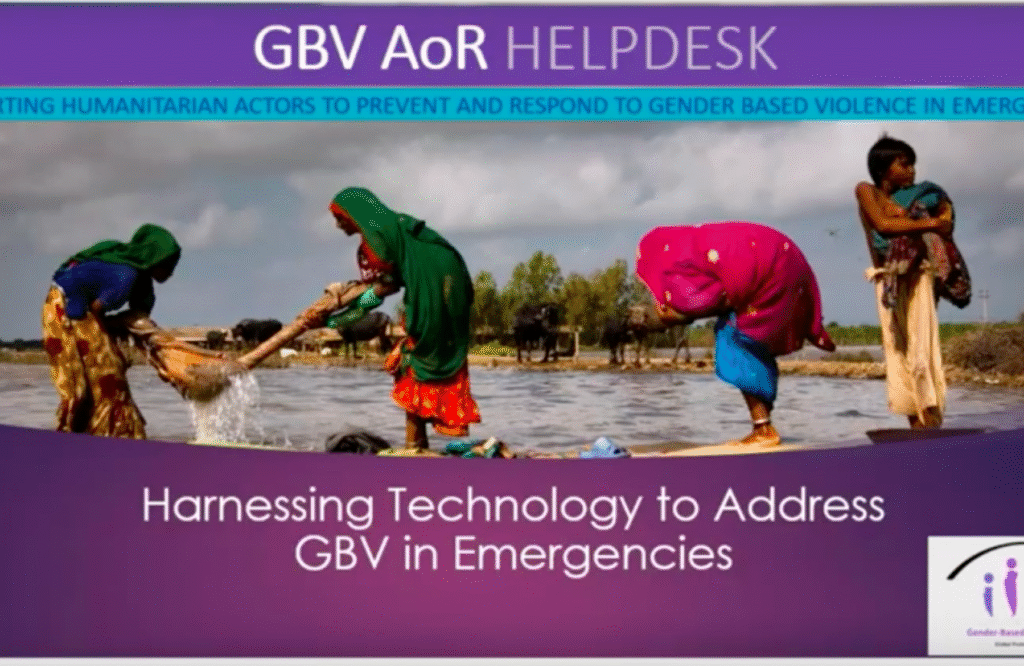
Harnessing Technology to Address Gender-Based Violence in Emergencies
Introduction of the Training Manual: Mental Health and Gender-Based Violence, helping survivors of sexual violence in conflict
How We Work
Our work on this issue is led by the Sub-Working Group on Clinical Management of Rape (CMR) and Intimate Partner Violence (IPV) — a dedicated group of IAWG members that brings together organizations working with health care providers and survivors in humanitarian settings to address challenges in the availability, accessibility and quality of clinical care for rape survivors. Learn about their current objectives, priorities, and latest work.
Gender-Based
Violence
Resources
Forensic Medical Examination after Conflict-Related Sexual Violence: A Scoping Review of the Literature
This review summarizes the knowledge on the forensic medical examination (FME) of survivors of conflict-related sexual violence (CRSV) in peer-reviewed studies. Scientific literature focusing on this topic is scarce and limited attention is given to CRSV-specific sequelae compared to physical and psychological ones. High-quality research focusing on forensic medical examination of torture, including CRSV, could serve to document operational methodologies and as a guideline to professionals conducting FME.
Using Vignettes to Gain Insights Into Social Norms Related to Voluntary Family Planning and Gender-Based Violence in South Sudan
This cross-sectional, descriptive study conducted in five counties in South Sudan used vignettes as a qualitative method to explore social norms related to family planning and reproductive health (FP/RH) and decisions related to contraceptive use and gender-based violence. The study identified restrictive social norms related to FP/RH, including entrenched, dominant gender roles (i.e., requiring male consent to use contraceptives) and risks for the woman and her provider if she accesses FP/RH services, recommending that programmes working to promote the use of FP/RH services in South Sudan to consider the challenges presented by social norms.
Foundational Principles for Applying the Concepts of Consent, Assent, Dissent and Evolving Individual Capacity to Ensure Trauma-informed Documentation, Justice, and Reparations Processes for Child Survivors of Sexual Violence
These foundational principles provide key considerations for professionals to use when developing and implementing consent and assent processes for child survivors of sexual violence that respect children’s right to be heard and evolving capacity within trauma-informed justice and reparation processes. This document was developed by Physicians for Human Rights (PHR) in collaboration with a community of practice made up of global experts from the medical, psychological, legal, ethical and human rights sectors.
Long-Acting Reversible Contraceptives in Crisis Settings
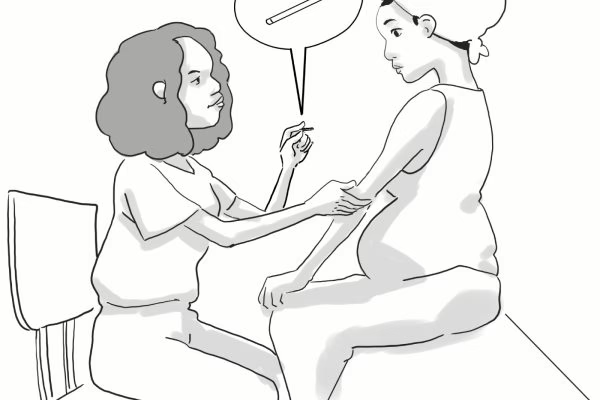
These materials are designed for use by clinical trainers conducting brief refresher face-to-face training workshops on providing long-acting reversible contraceptive (LARC) services and family planning counseling, particularly in crisis settings or with limited resources. The target audience for this training is health care providers already familiar with LARCs, including insertion and removal of intrauterine devices (IUDs) and implants.
A Proposal for a Follow-Up Algorithm for Survivors of Sexual Violence in the Context of a Humanitarian Crisis
Sexual violence is a continuum of actions that constitute a violation of consecrated Human Rights and that has consequences in the short, medium and long term. This issue is aggravated in situations of conflict, forced migration and natural disasters, which is why the UN has considered it one of the priorities to be primarily addressed in a crisis. In order to systematize the good practices for approaching survivors of sexual violence, the group of authors proposes the application of this algorithm as a working tool, in accordance with the standards stipulated by the World Health Organization, IAWG and UNFPA.