
Adolescent Sexual and Reproductive Health and Rights
Mobilizing adolescents' resilience, resourcefulness, and energy to address their unique vulnerabilities.
Increase the availability of and access to age-appropriate adolescent sexual and reproductive health services.
Involve adolescents in adolescent sexual and reproductive health programs and provide support to local adolescent-led initiatives and organizations.
Create a safe and supportive environment where adolescents can develop and thrive.
Why it matters
Humanitarian emergencies often increase adolescents’ vulnerability to violence, poverty, separation from families, sexual abuse, and exploitation that can greatly affect the ability of adolescents to practice safe reproductive health behaviors.
We build upon adolescents’ capacities and support local adolescent-led initiatives and organizations in humanitarian responses.
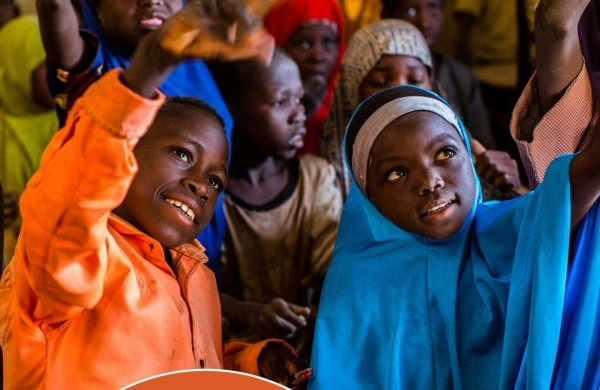
Adolescent Sexual and Reproductive Health (ASRH) Toolkit for Humanitarian Settings: 2020 Edition
Adolescent Sexual and Reproductive Health in Humanitarian Settings eLearning
How We Work
Our work on this issue is led by the Adolescent Sexual and Reproductive Health and Rights (ASRHR) Sub-Working Group—a dedicated group of IAWG members who set the priorities and objectives of research, implementation, and best practices for adolescent sexual and reproductive health in humanitarian settings. Learn about their current objectives, priorities, and latest work.
Adolescent Sexual and Reproductive Health and Rights Resources
Adolescent Sexual and Reproductive Health (ASRH) Toolkit for Humanitarian Settings: 2020 Edition
The Adolescent Sexual and Reproductive Health (ASRH) Toolkit provides strategies and tools to help close the SRH service provision gap for adolescents by building upon the advocacy endeavors and lessons learned from the past decade to advance SRH prioritization for adolescents in humanitarian contexts. The Toolkit does not promote a one-size-fits-all approach; instead, it calls on humanitarians to prioritize life-saving SRH services throughout the entire program cycle and humanitarian continuum—not only during the crisis phase, but also before its onset, during the recovery, and beyond, toward long-term development.
Youth Health Line Standard Operating Procedure
UNFPA supports the Youth Health Line (YHL), launched in 2012, as a nationwide, youth friendly health service to provide information and counseling for adolescents and youth on issues related to their health and reproductive health. This Standard Operating Procedure for YHL provides a critical resource for the administration and day-to-day management and is designed to provide direction to all staff responsible for carrying out the administrative and managerial functions of the YHL. It is intended to guide UNFPA Implementing Partners in running the YHL with a consistent approach to ensure improved access and quality of services provided to adolescents and youth in Afghanistan.
Supplemental Guide to the 2020 Adolescent Sexual and Reproductive Health Toolkit in Humanitarian Settings for Youth-led Organizations
The supplemental guide to the 2020 Adolescent Sexual and Reproductive Health (ASRH) Toolkit for Humanitarian Settings is specially tailored for youth-led organizations (YLOs), in response to feedback received during the revision process for the 2020 ASRH Toolkit.
Our Bodies, Our Rights! Addressing Sexual and Reproductive Health and Rights and Gender-based Violence for Women and Young People with Disabilities
This interactive in-person workshop curriculum is focused on addressing sexual and reproductive health and rights and gender-based violence. The curriculum is designed for facilitators with disabilities to provide information and experiential learning for organizations of persons with disabilities to lead future trainings in their communities.
Service Mapping of the Adolescents and Youth Programs in Afghanistan
The 4Ws (Who, What, Where, Whom) matrix for the adolescents and youth services is a crucial tool used by the Adolescents and Youth Working Group to provide an overview of essential services available for this group of populations in Afghanistan, as well as the actors implementing programs in specific locations across the country. The data collection took place in September 2023 and the findings of the report will be helpful for the humanitarian actors to minimize the gaps and avoid the duplication of efforts